
Long hairstyles for thin hair can look beautifully full when the haircut preserves density instead of relying on excessive layering. Strong perimeters, subtle face-framing pieces, soft waves, restrained long layers, and strategic fringe can create movement while keeping the ends substantial. The objective is to distribute volume carefully so longer strands retain body rather than becoming sparse through the lower lengths.
Thin hair refers to lower overall density, while fine hair describes individual strand diameter, so the best approach varies from person to person. Some thin hair benefits from an almost one-length shape, while naturally wavy textures can support additional movement. These 20 long hairstyles for thin hair offer practical ways to maintain length while creating a fuller-looking silhouette.
Beautiful Long Hair Starts With Preserving Density
When hair is thin, every layer removes some weight from a particular area. Numerous short layers, aggressive razoring, and heavily feathered ends can sometimes make already limited density more noticeable. Longer, restrained layers generally preserve a stronger-looking perimeter.
Styling can then create additional dimension without changing the haircut dramatically. Root-lifting products, broad waves, strategic parting, and gentle blow-drying can encourage movement. Lightweight products are particularly important because thin hair can become flat quickly when overloaded with heavy creams, waxes, or oils.
Long One-Length Hair With Blunt Ends
A predominantly one-length haircut keeps maximum density through the lower perimeter, making long thin hair appear noticeably more substantial. The clean baseline creates visual weight at the ends while avoiding shorter layers that could expose additional space between strands.

Apply lightweight root mousse before blow-drying with gentle elevation. Keep the lengths smooth or introduce subtle bends for movement. Avoid heavy oils through the upper sections because they can collapse volume quickly. Regular trims are particularly important for maintaining the crisp, fuller-looking perimeter that gives this haircut its strength.
Long Hair With Minimal Face-Framing Layers
Minimal face-framing layers introduce movement around the front without removing significant density from the main lengths. Starting the shortest pieces around the jaw or below can create softness while keeping the overall silhouette substantial and flowing.

Apply root-lifting spray and blow-dry the front sections away from the face using a large round brush. Keep the remaining lengths comparatively smooth. Avoid cutting numerous layers throughout the back. A few thoughtfully positioned pieces can create visible movement while preserving the valuable density needed through the lower perimeter.
Long Soft Waves With Strong Ends
Broad waves can make thin hair appear more dimensional by creating bends that prevent strands from lying completely flat against one another. Maintaining a relatively blunt perimeter ensures the lower sections still look substantial rather than overly feathered.

Apply lightweight volumizing mousse before drying and use heat protection if creating waves with a styling tool. Alternate the direction of selected sections and keep the curls broad. Once cool, loosen them gently with your fingers instead of brushing aggressively. Flexible spray can support movement without weighing down the finished style.
U-Shaped Long Haircut
A U-shaped perimeter creates gentle curvature through the back while preserving considerably more density than heavily layered cuts. The rounded baseline adds shape without dramatically shortening the side sections, making it useful when maintaining both length and fullness is important.

Apply lightweight smoothing or volumizing product according to natural texture. Add broad bends through selected lengths if desired. Keep internal layering minimal so the perimeter remains substantial. Regular trims help preserve the curved outline and prevent thinner ends from weakening the fuller-looking effect.
Long Hair With Curtain Bangs
Curtain bangs can introduce noticeable movement around the face without requiring extensive layering throughout the remaining hair. Their center opening creates a soft frame, while longer outer pieces can blend gradually into an otherwise substantial long haircut.

Blow-dry the fringe away from the face with a round brush and keep the crown gently elevated. Avoid removing too much density from the surrounding front sections. Style the remaining lengths smoothly or with broad waves. Lightweight texture spray can support the bangs without making delicate strands appear separated.
Long Hair With Deep Side Part
A deep side part shifts additional hair toward one side, creating immediate root lift and the appearance of greater fullness through the upper silhouette. Keeping the lengths minimally layered allows the lower sections to retain as much density as possible.

Establish the side part while the hair is damp and apply lightweight root mousse. Blow-dry the fuller side against its natural direction before settling it into place. Keep the lower lengths smooth or softly waved. Tucking the lighter side behind the ear can further emphasize the directional volume.
Long Layers With Blunt Perimeter
Long layers can create movement in thin hair when they begin relatively low and remain limited in number. Combining them with a strong lower perimeter prevents the ends from becoming excessively wispy while still providing enough variation for styling.

Apply volumizing mousse at the roots and create broad bends through selected layers. Avoid curling every section identically, which can make the style look overly arranged. Once cool, loosen the movement with your fingers. Keeping the lowest sections relatively blunt preserves the density that makes long hair appear fuller.
Long Hair With Bottleneck Bangs
Bottleneck bangs begin shorter near the center before gradually extending toward the temples and cheekbones. This curved fringe creates visible facial framing while allowing the majority of the hair to remain long, substantial, and minimally layered.

Blow-dry the central fringe forward with gentle tension and direct the outer pieces away from the face. Keep styling products lightweight around the forehead. The remaining lengths can stay straight or softly waved. Avoid extending the fringe too deeply into the sides if preserving overall density is a priority.
Long Straight Hair With Center Part
Long straight hair can look beautifully substantial when the ends remain strong and the overall shape avoids unnecessary layering. A center part provides clean symmetry, while subtle root elevation prevents the upper sections from appearing completely flat.

Apply lightweight volumizing product near the scalp and heat protection through the lengths before blow-drying. Keep the perimeter smooth and substantial. If using a straightener, avoid repeatedly compressing the roots. A slight natural bend through the ends can provide softness without reducing the haircut’s sleek character.
Long Hair With Soft Side-Swept Bangs
Side-swept bangs create diagonal movement across the forehead while preserving more density than a particularly heavy full fringe. Keeping the bangs relatively long also allows them to blend easily into the surrounding hair as they grow.

Apply lightweight mousse and blow-dry the fringe toward one side with gentle root elevation. Keep the remaining lengths minimally layered and substantial. A few broad waves can add additional dimension. Avoid excessive product through the bangs because thin strands can quickly clump together and appear less dense.
Long V-Cut With Subtle Layers
A softened V-shaped perimeter creates a longer central point through the back while gently shortening the outer sections. Keeping the angle restrained helps preserve density through the sides, making this version more suitable for thin hair than dramatically layered V cuts.

Apply lightweight volumizing product and add broad movement through selected sections. Keep the lowest point substantial and avoid heavy thinning around the perimeter. Regular trims help prevent the central section from becoming noticeably sparse. The gentle V shape provides interest while preserving impressive overall length.
Long Wavy Hair With Minimal Layers
Naturally wavy thin hair can gain considerable visual fullness from its existing texture, so extensive layering is often unnecessary. A strong perimeter paired with only a few longer layers allows the waves to create movement without sacrificing valuable density.

Apply lightweight wave foam to damp hair and scrunch gently. Allow it to air-dry or diffuse with controlled airflow. Once completely dry, avoid brushing through the waves. Lift selected roots with your fingertips instead. Keeping natural wave groups intact helps the hairstyle appear fuller and more dimensional.
Long Hair With Wispy Curtain Fringe
Wispy curtain fringe provides delicate facial framing without requiring the amount of hair needed for thick bangs. The light pieces open around the forehead and blend into longer front sections, creating softness while preserving density through the main lengths.

Blow-dry the fringe away from the face with minimal tension. Avoid heavy creams or oils around the bangs because fine sections can separate quickly. Keep the surrounding hair full and minimally layered. Gentle root spray can provide additional lift without making the airy fringe appear stiff or overly styled.
Long Hair With Rounded Ends
A softly rounded perimeter provides shape while maintaining a substantial lower edge. Unlike highly pointed or heavily layered cuts, the gentle curve keeps more hair concentrated around the bottom, helping thin lengths appear fuller when viewed from both the front and back.

Apply lightweight smoothing mousse and blow-dry according to natural texture. Add a restrained bend through the ends using a large round brush. Avoid aggressive feathering or thinning. The rounded baseline should provide most of the visual structure, allowing everyday styling to remain relatively simple.
Long Hair With Soft Flipped Ends
Softly flipped ends create outward movement that can make a relatively simple long haircut appear more dimensional. Keeping the underlying cut minimally layered ensures the perimeter remains substantial while the directional styling provides additional visual width and movement.

Apply heat protection and lightweight volumizing mousse before drying. Use a large round brush or styling tool to direct selected ends outward. Keep the flips broad rather than tightly curled. Once cool, separate them gently with your fingers and finish with flexible spray for movement without stiffness.
Long Hair With Subtle Invisible Layers
Invisible layers remove small amounts of internal weight without creating obviously short pieces through the surface. When used conservatively, they can give thin hair movement while allowing the exterior and lower perimeter to maintain a relatively dense appearance.

Apply lightweight volumizing mousse and blow-dry with gentle root elevation. Add broad movement through the mid-lengths when desired. Avoid requesting extensive internal thinning because limited density still needs preservation. The goal is subtle mobility rather than dramatically separated layers throughout the haircut.
Long Hair With Soft Curls
Soft curls create volume through bends and curves, making long thin hair appear more substantial without requiring aggressive layering. A strong baseline beneath the curls helps the lower sections maintain density once the texture begins relaxing throughout the day.

Apply lightweight mousse and heat protection before creating broad curls. Allow each section to cool completely before loosening it. Use your fingers rather than a dense brush to maintain fullness. Finish with flexible hairspray, concentrating lightly around the roots and mid-lengths instead of saturating the delicate ends.
Long Hair With Long Curtain Layers
Long curtain layers begin around the cheekbones or jaw and sweep gradually into the main lengths. Keeping the transitions extended creates facial movement while avoiding the substantial density loss that can occur with numerous shorter layers.

Blow-dry the front layers away from the face using a large round brush and maintain gentle root lift. Keep the back sections comparatively simple and substantial. Once cool, loosen the facial pieces with your fingers. Lightweight finishing spray can preserve movement without causing thin strands to stick together.
Extra-Long Hair With Strong Perimeter
Extra-long thin hair benefits particularly from a strong baseline because extended lengths can make sparse ends more noticeable. Keeping layering extremely restrained concentrates available density near the bottom and creates a cleaner, healthier-looking silhouette.

Use lightweight leave-in conditioner only where necessary and apply volumizing product around the roots. Keep heat styling moderate because fragile long ends can become weathered quickly. Regular micro-trims can remove weakened tips without sacrificing substantial length. A clean perimeter provides the strongest visual impression of fullness.
Long Hair With Loose Face-Framing Waves
Loose face-framing waves introduce dimension around the cheeks, jaw, and shoulders while allowing the majority of long hair to remain minimally layered. The movement creates visual fullness near the front without requiring significant weight removal throughout the haircut.
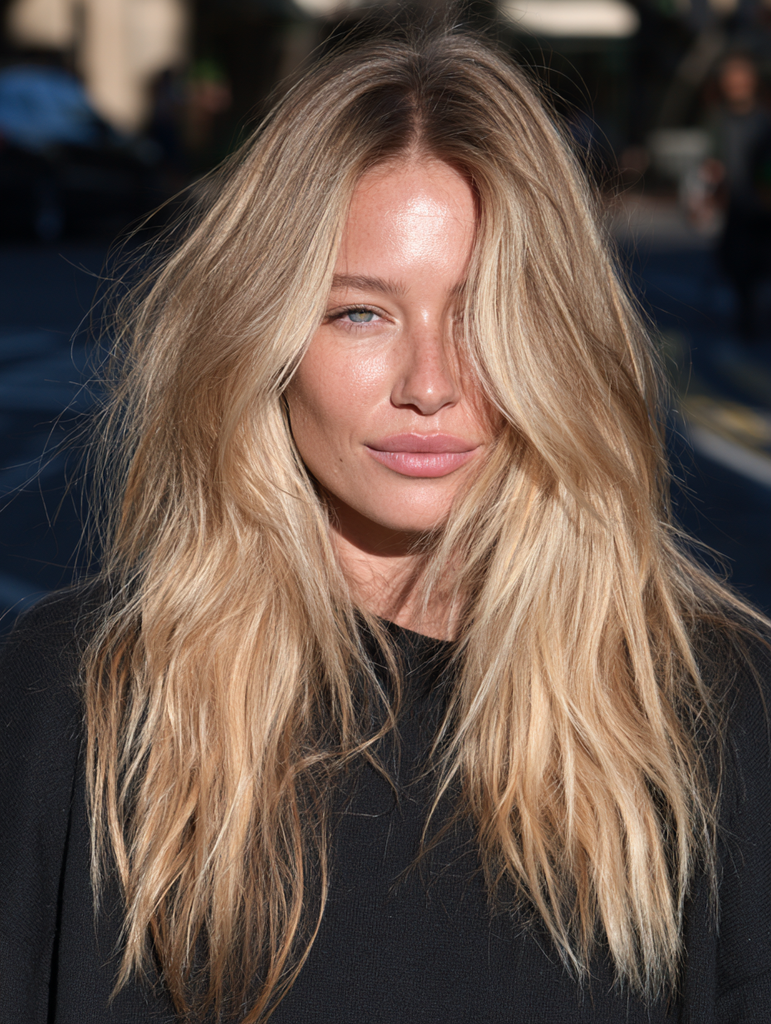
Apply root-lifting mousse and create broad waves through the front and selected mid-length sections. Leave some pieces straighter for natural variation. Once cool, loosen everything gently with your fingertips. Avoid overworking the ends, where preserving a substantial appearance is particularly important for thin hair.
How to Style Long Thin Hair for More Volume
Concentrate lightweight volumizing products near the roots rather than applying them heavily throughout the lengths. Blow-drying against the natural growth direction can create temporary lift, while a side part can immediately shift more hair toward one area. Broad waves and curls also produce dimension by preventing strands from lying completely flat.
Avoid heavy oils, thick creams, and excessive waxes unless your texture specifically needs them. Thin hair can lose volume quickly when overloaded. Dry texture spray may provide grip, while flexible hairspray can support movement. When using hot tools, keep temperatures appropriate for your strands and avoid repeatedly styling the same delicate sections.
Final Thoughts
Long hairstyles for thin hair can look full, flowing, and beautifully dimensional when density is preserved strategically. One-length cuts, blunt ends, U-shaped perimeters, restrained layers, curtain fringe, soft waves, and strategic face framing all provide options without sacrificing dramatic length.
Choose a haircut according to your actual density, strand texture, natural movement, and preferred maintenance routine. Avoid assuming that more layers automatically mean more volume. With strong ends, thoughtfully placed movement, and lightweight styling, thin hair can retain impressive length while appearing noticeably fuller and more substantial.
