
Hairstyles for thin hair over 50 work best when the haircut creates structure without removing too much natural density. Strategic layering, stronger perimeters, side-swept bangs, subtle graduation, and carefully placed texture can help hair appear fuller while maintaining soft movement. Short pixies and bobs are especially useful, although medium lengths can also work beautifully when the ends remain healthy and substantial.
Styling technique matters just as much as the haircut. Lightweight volumizing products, strategic root lift, and gentle blow-drying can encourage body without coating delicate strands. These 18 hairstyles explore different ways to give thin hair shape, dimension, and practical everyday versatility.
Why Fullness-Focused Hairstyles Continue to Work
Thin hair benefits from hairstyles that create visual density instead of relying on excessive layering. Stronger ends can make the perimeter appear thicker, while carefully positioned crown layers encourage lift. Bangs and strategic parting can also redistribute hair to create a fuller-looking silhouette.
These techniques remain useful because they can be adapted as density, texture, and styling preferences change. Rather than forcing thin hair into high-volume shapes, successful cuts work with its natural characteristics. This approach creates movement while preserving enough weight to keep the hairstyle polished and balanced.
Soft Layered Pixie
A soft layered pixie removes excess length while keeping enough hair through the crown to create gentle fullness. Carefully blended layers encourage movement without making thin strands appear overly separated, while shorter sides give the upper section greater visual prominence.
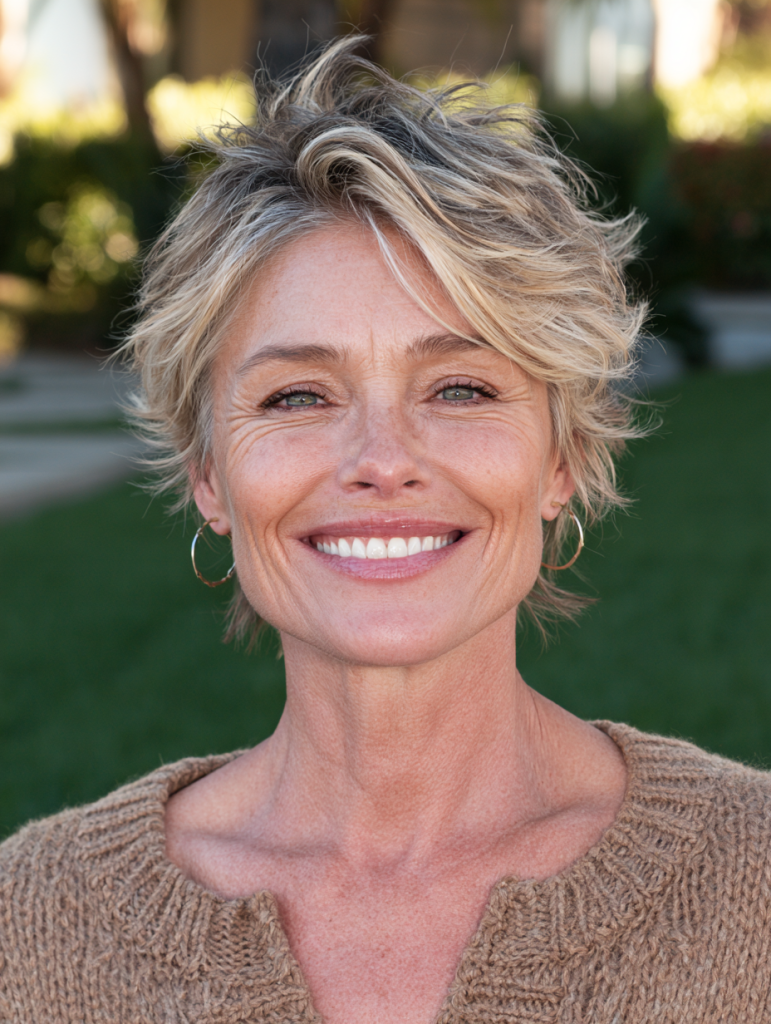
Apply lightweight volumizing mousse near the roots and blow-dry the crown upward with your fingers. Avoid heavy waxes or oils that can collapse delicate strands. Finish by separating only a few upper pieces, maintaining enough softness for the pixie to appear naturally full rather than excessively textured.
Blunt Chin-Length Bob
A blunt chin-length bob creates a strong perimeter that can make thin hair appear noticeably denser through the ends. Keeping layering minimal preserves valuable weight, while the compact length prevents delicate strands from becoming excessively flat.
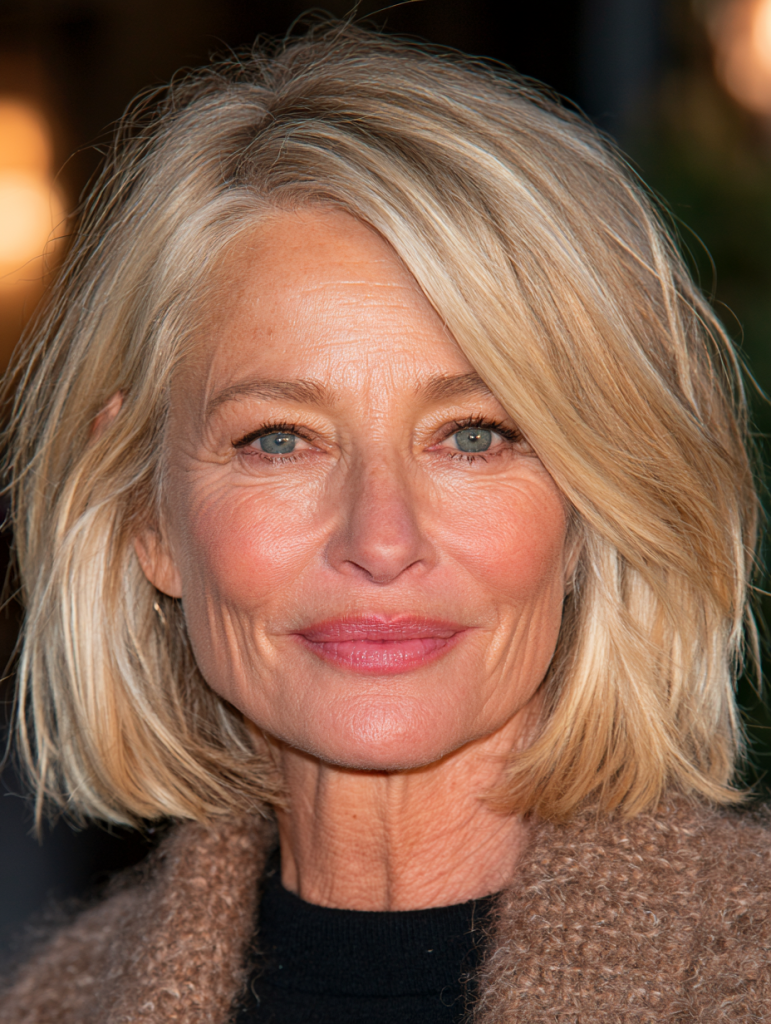
Blow-dry with a round brush and create gentle elevation around the roots rather than flattening the surface. Turn the ends slightly inward for a polished finish without making them overly rounded. A small amount of lightweight serum can control flyaways while maintaining the crisp, fuller-looking line around the jaw.
Short Stacked Bob
A short stacked bob uses gentle graduation through the back to create natural lift around the crown. Longer front sections preserve fullness around the face, giving thin hair a balanced silhouette without requiring extensive layering throughout the entire haircut.
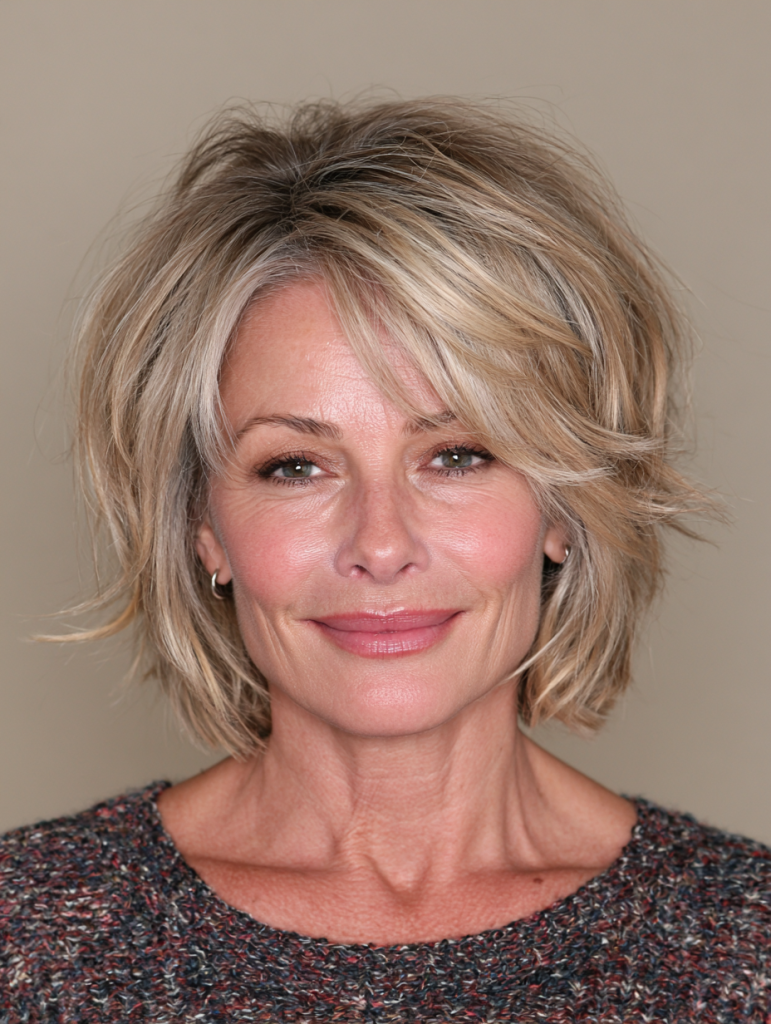
Apply root-lifting spray before blow-drying the back with a small round brush. Focus on elevation at the crown while keeping the front smooth and softly curved. Avoid dramatic stacking, since subtle graduation usually preserves more density. Flexible hairspray can support the shape without making fine strands stiff.
Pixie with Side-Swept Bangs
Side-swept bangs give a pixie additional softness while allowing thin strands to overlap naturally across the forehead. Keeping the fringe slightly longer creates visual density at the front, while shorter crown sections encourage gentle lift behind it.
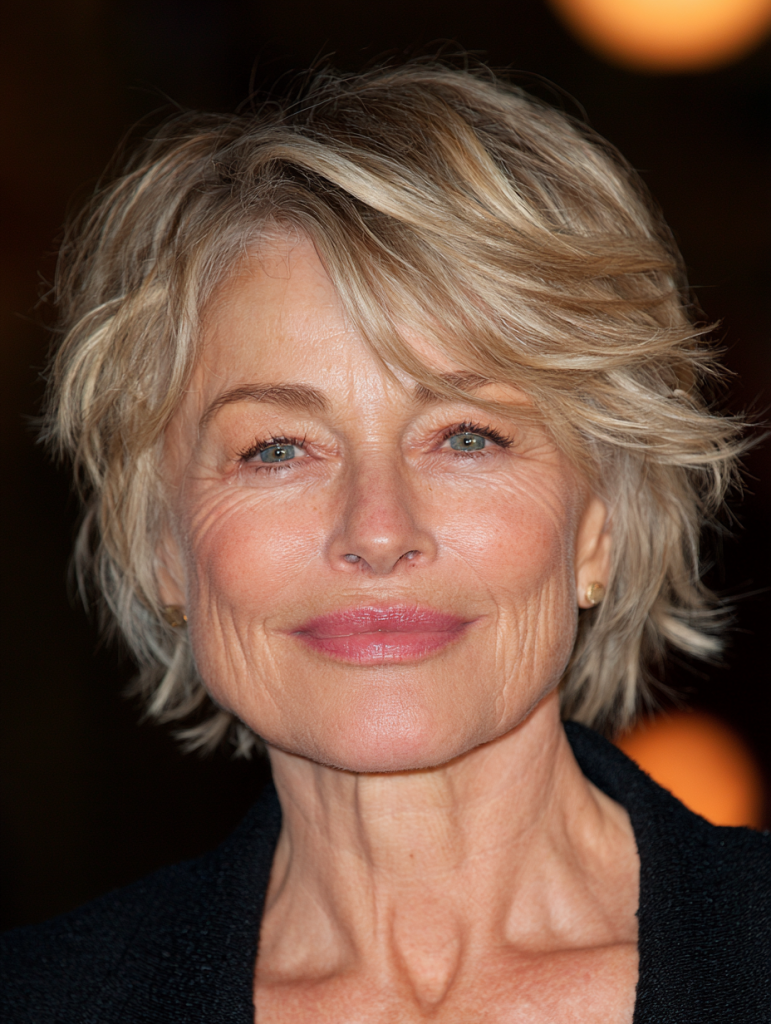
Direct the bangs diagonally during blow-drying and lift them lightly at the roots. Keep styling products minimal through the fringe to preserve movement. A lightweight volumizing spray around the crown can provide extra support, creating a balanced pixie with softness, dimension, and practical everyday manageability.
Rounded Short Bob
A rounded short bob creates gentle fullness through its curved silhouette while keeping the perimeter substantial. Subtle internal shaping prevents heaviness without removing too much density, making this style particularly useful when thin hair needs a softer appearance.
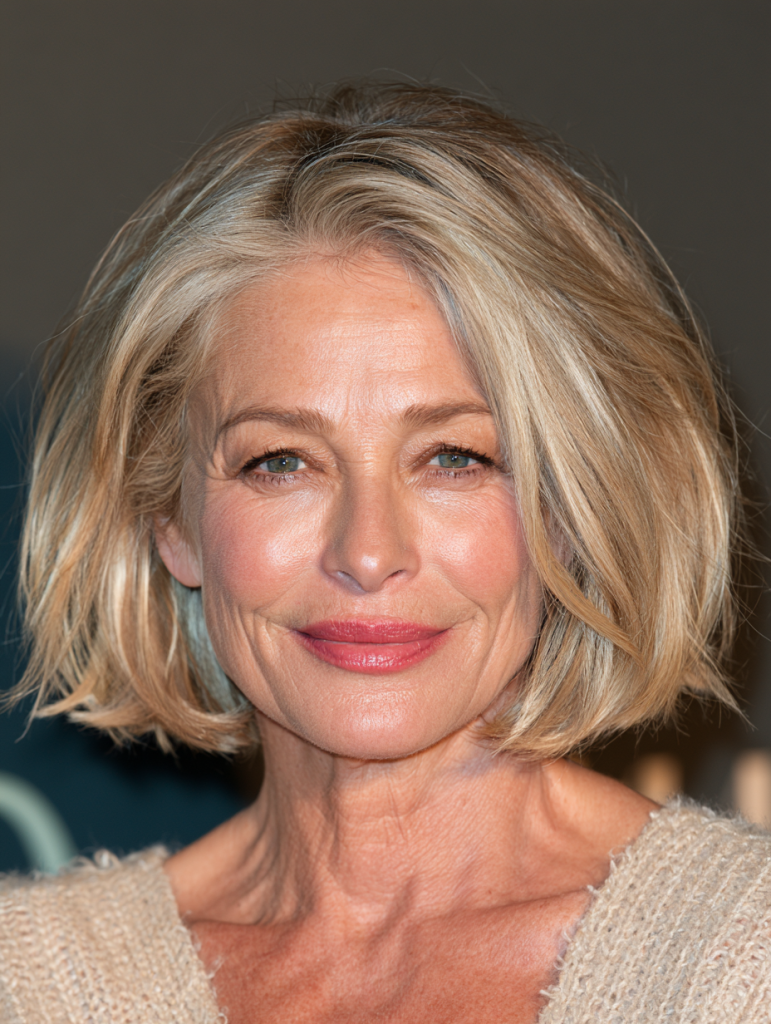
Use a small round brush to establish root lift and relaxed curvature during blow-drying. Avoid turning every end sharply inward because natural movement keeps the hairstyle contemporary. Lightweight finishing spray can preserve the rounded shape while allowing the strands to remain flexible, airy, and comfortably touchable.
Fine-Hair Bixie Cut
A bixie combines the compact practicality of a pixie with slightly longer bob-inspired sections through the crown and sides. This additional length gives thin hair more styling flexibility while maintaining enough shortness to prevent the roots from being pulled flat.
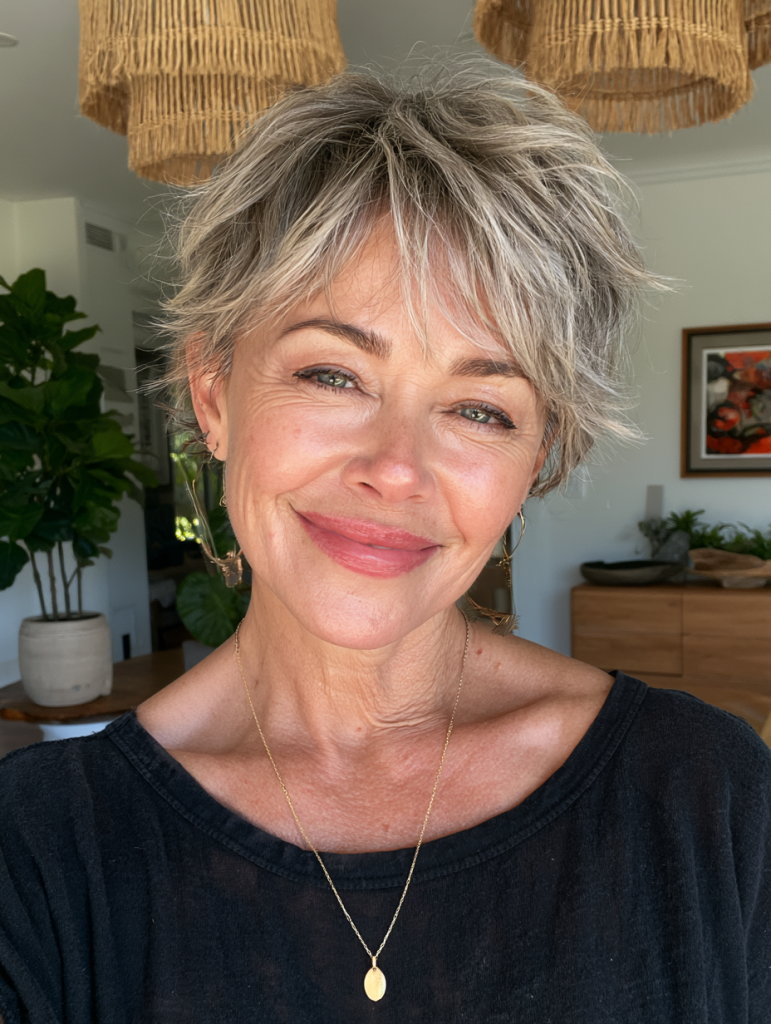
Apply volumizing mousse to damp hair and lift the crown gently while blow-drying. Tuck one side behind the ear for added asymmetry when desired. A light texture spray can separate selected pieces without reducing density, giving the haircut a fuller and naturally dimensional finish.
Bob with Deep Side Part
A deep side part redistributes thin hair toward one side, creating immediate volume without removing additional length. The heavier section can sweep naturally across the forehead, making the front appear fuller while introducing flattering asymmetry
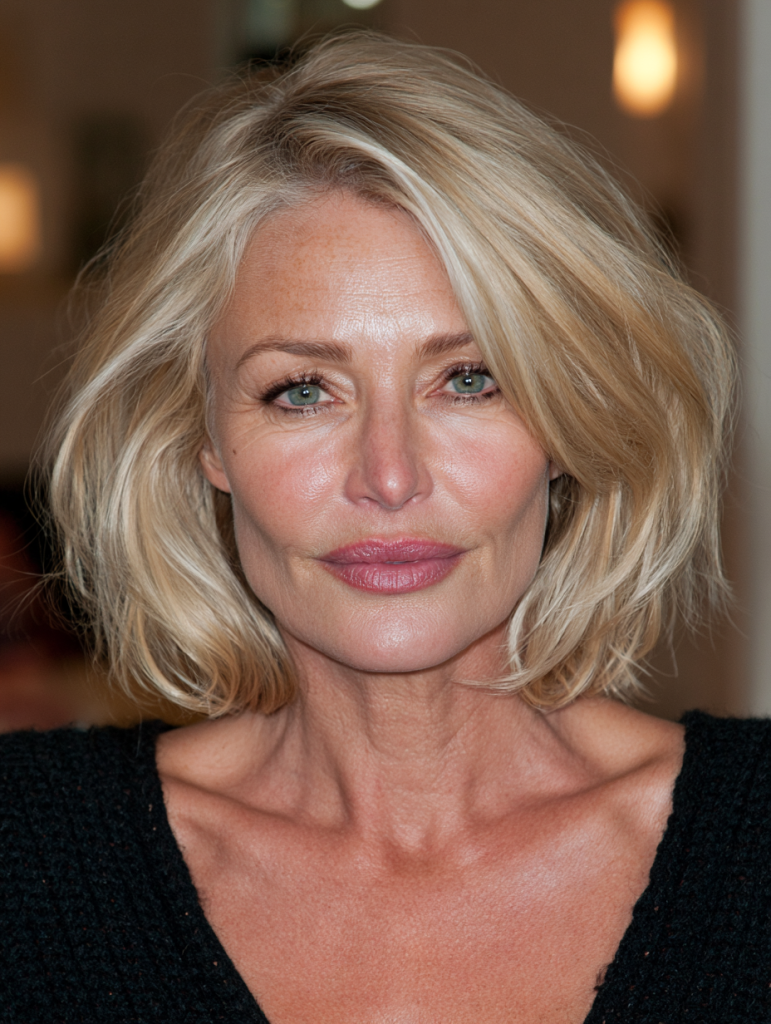
Establish the part while the hair is damp and blow-dry the roots in the opposite direction briefly for extra lift. Keep the ends smooth and relatively full. Lightweight finishing spray can support the elevated roots without stiffness, producing a simple bob with noticeably improved body and movement.
Wispy Pixie with Long Crown
A wispy pixie with additional crown length provides enough hair for visible lift while maintaining a neat, compact lower silhouette. Light texture keeps the style from appearing rigid, but restrained layering helps preserve density through delicate strands.

Use root spray around the upper sections and blow-dry upward with a small brush or your fingers. Avoid aggressive teasing, which can stress thin hair. Once dry, define only several crown pieces using lightweight styling cream. The result feels airy and modern while maintaining a naturally fuller appearance.
Blunt Bob with Side Bangs
A blunt bob paired with side bangs combines a dense-looking lower perimeter with soft movement around the forehead. The stronger ends preserve visual fullness, while the longer fringe introduces shape without requiring extensive layers throughout the haircut.
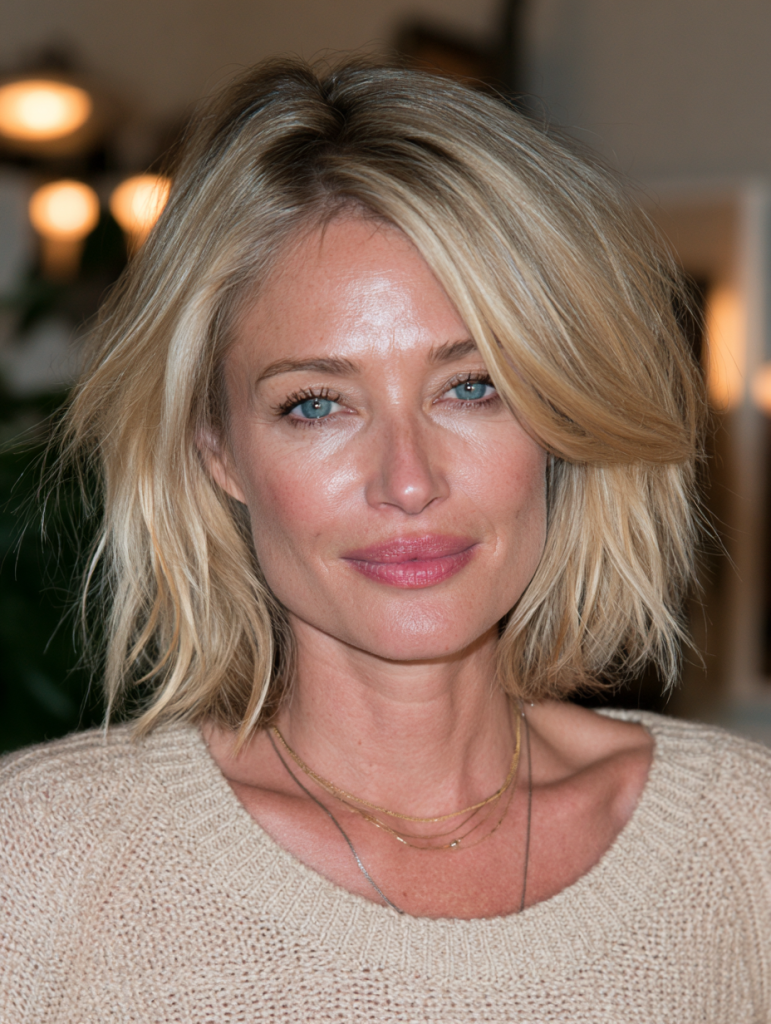
Blow-dry the bob smoothly with subtle root lift and direct the bangs diagonally across the forehead. Keep the ends softly curved rather than sharply tucked inward. A lightweight volumizing mist can provide additional body around the crown while maintaining the clean, substantial appearance of the lower edge.
Tousled Short Bob
A tousled short bob creates the appearance of additional movement through gentle irregularity rather than heavy layering. Keeping the underlying perimeter relatively strong preserves density, while loose bends and subtle separation prevent thin hair from lying completely flat.
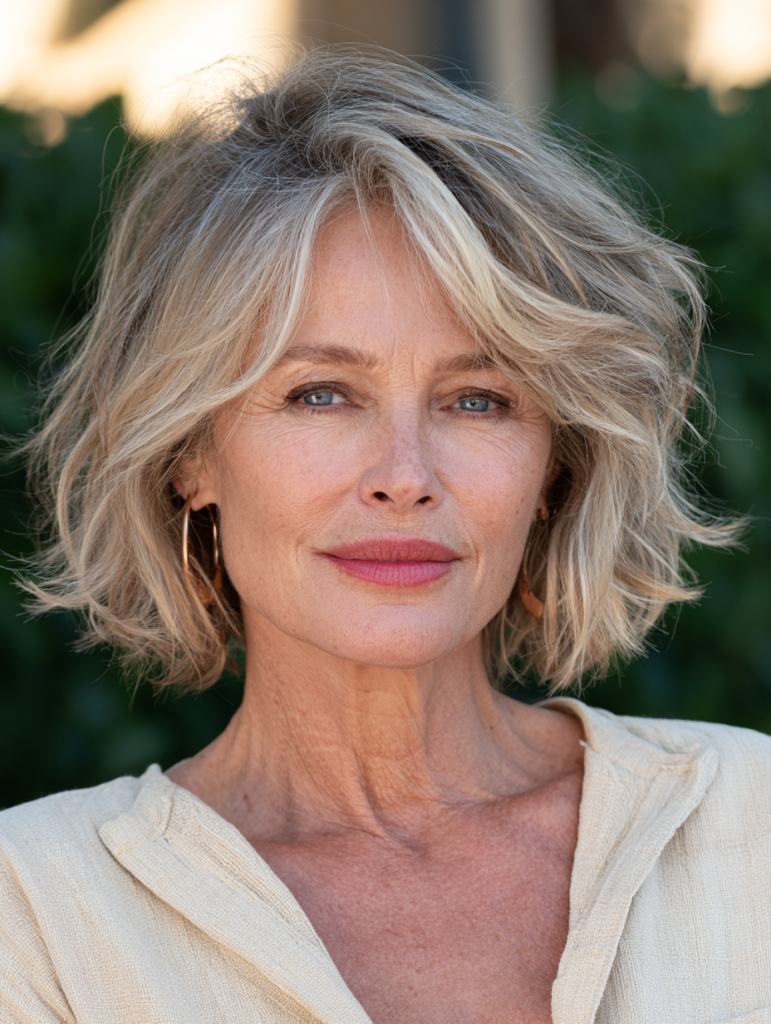
Work lightweight mousse through damp hair and rough-dry while lifting the roots with your fingertips. Add several loose bends once dry, leaving some pieces straighter for contrast. Finish with dry texture spray applied sparingly, creating an airy bob that remains soft rather than overly fragmented.
Feathered Short Pixie
A feathered short pixie creates airy crown movement by directing delicate layers slightly away from the face. Keeping the feathering controlled prevents excessive thinning, while the compact sides help the upper section appear fuller through contrast
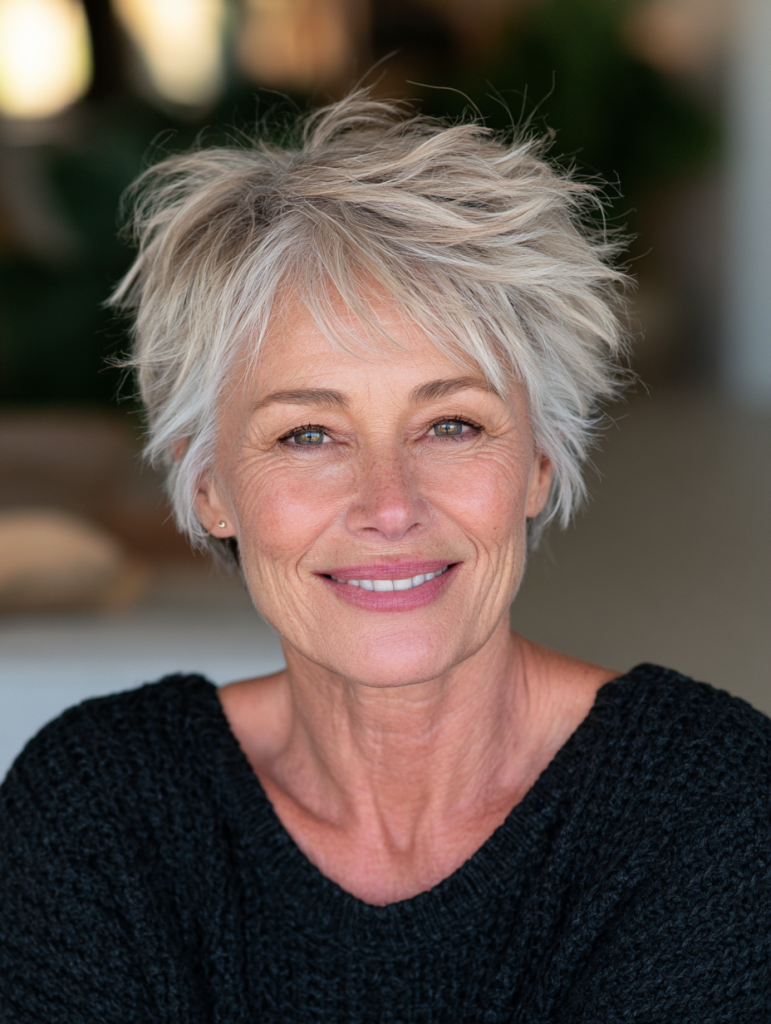
Blow-dry with a small round brush and gently lift the crown while sweeping selected sections outward. Use minimal styling cream through the ends to preserve flexibility. Avoid heavy smoothing products near the roots, allowing the feathered layers to maintain their light, dimensional appearance throughout the day.
Short Bob with Wispy Bangs
A short bob with wispy bangs offers gentle forehead coverage without requiring a dense fringe that could remove too much hair from the crown. The lighter bangs create softness while a relatively blunt perimeter maintains visual fullness through the lower sections.
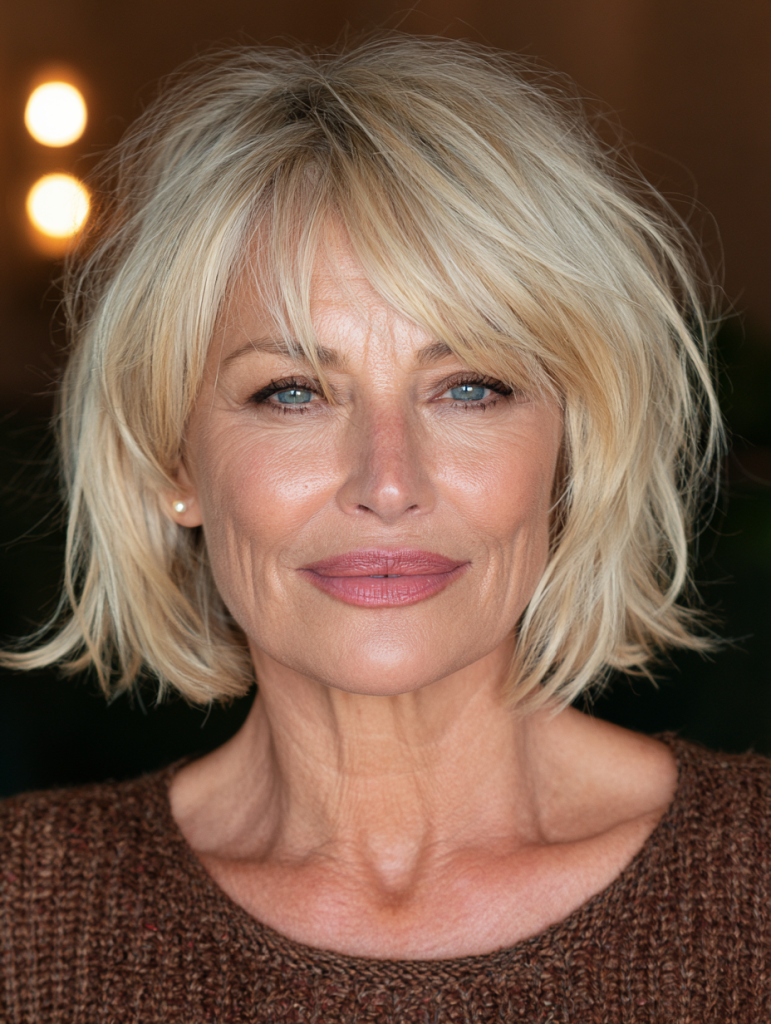
Shape the fringe with minimal tension during blow-drying and create subtle root lift behind it. Keep the bob smooth with relaxed movement through the ends. Lightweight hairspray can support the overall shape without creating stiffness, helping thin strands remain airy, polished, and naturally movable.
Textured Crop with Crown Volume
A textured crop concentrates volume through the crown while keeping the sides and neckline short. Strategic upper length allows thin hair to be lifted and separated, creating dimension without relying on excessive layers or complicated styling techniques.
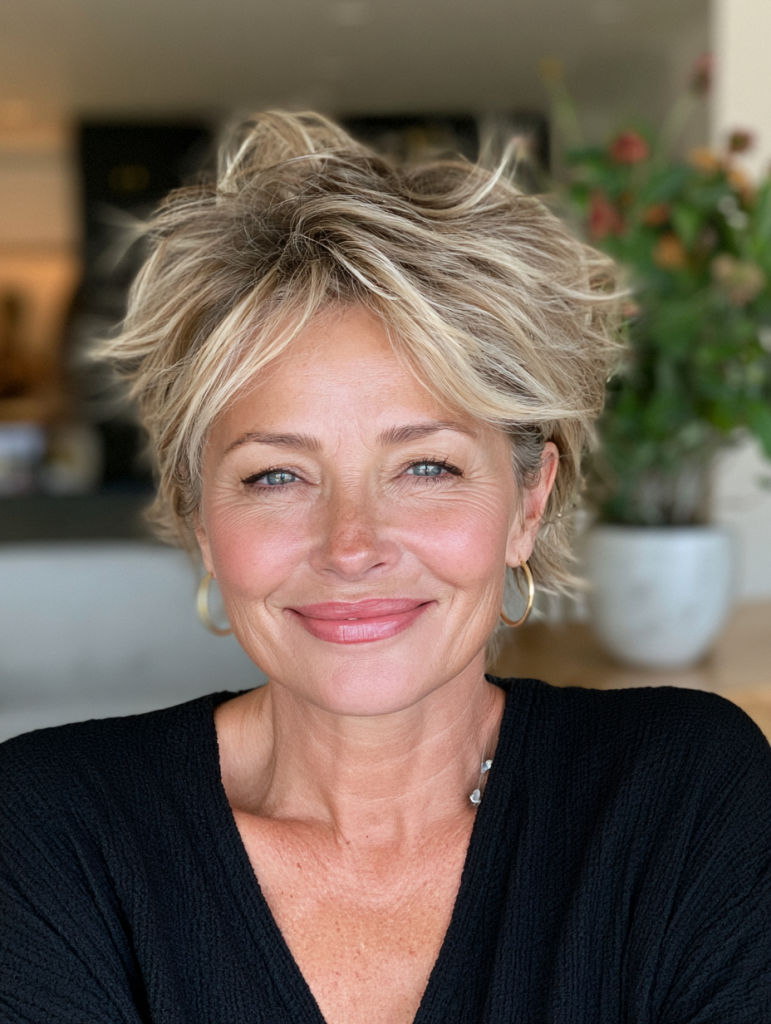
Apply root-lifting mousse before blow-drying the upper sections upward. Once completely dry, use a tiny amount of lightweight texture paste to define selected pieces. Keep the sides smoother to strengthen the contrast. This controlled approach creates noticeable crown fullness while maintaining a neat and sophisticated short silhouette.
Shoulder-Length Blunt Lob
A shoulder-length blunt lob offers more length while preserving a substantial perimeter that helps thin hair appear thicker. Minimal layering prevents the ends from becoming transparent, while the shoulder-skimming shape provides enough versatility for straight, wavy, or softly curled styling.
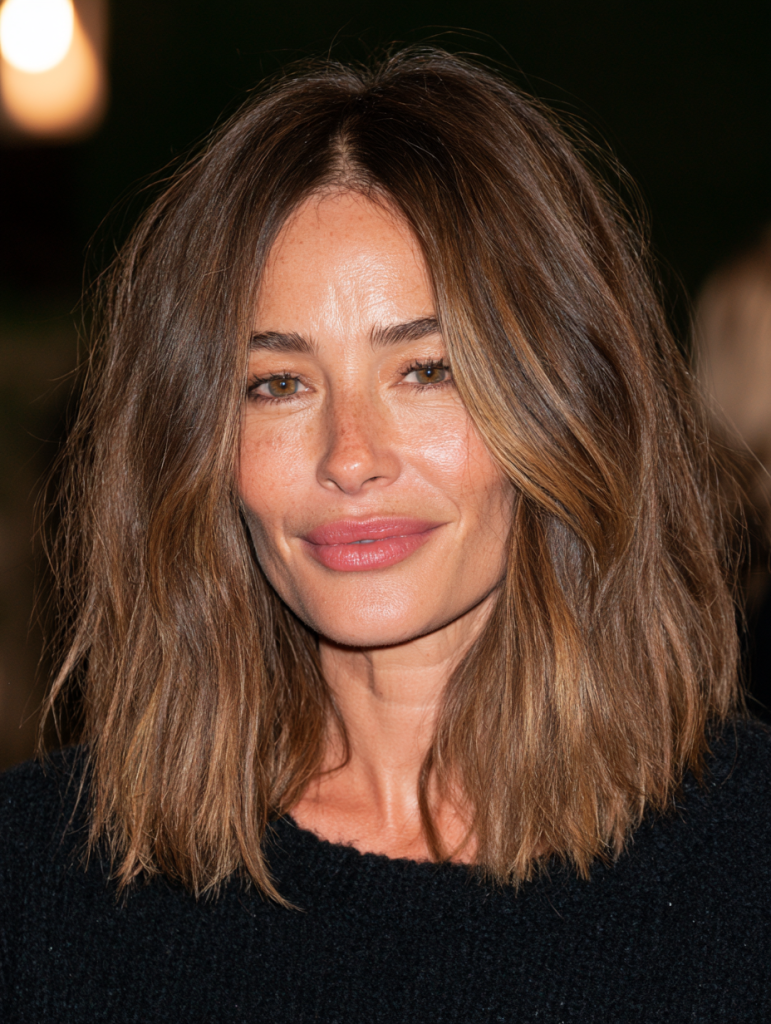
Blow-dry with gentle root elevation and maintain a smooth surface through the mid-lengths. Add broad bends rather than tight curls when extra movement is desired. A lightweight volumizing spray can support the roots, while sparing serum through the ends keeps the strong perimeter polished and healthy-looking.
Soft Wavy Bob
A soft wavy bob creates visual fullness by introducing broad bends throughout a compact silhouette. The waves prevent thin strands from sitting closely together, while minimal layering helps preserve enough density around the lower perimeter.
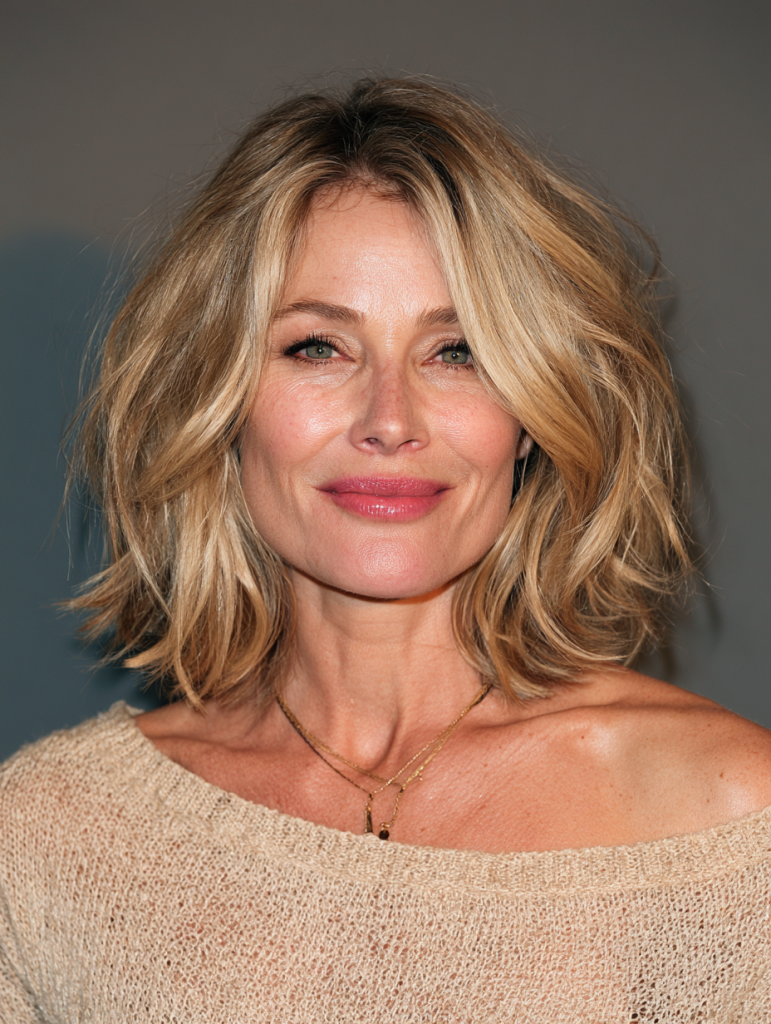
Apply lightweight mousse before drying and create loose waves in alternating directions. Leave the ends slightly straighter to maintain a contemporary finish. Once cooled, separate the waves gently with your fingers rather than brushing. This technique encourages airy movement while keeping the bob balanced, soft, and naturally fuller-looking.
Short Layered Bob with Crown Lift
A short layered bob can support thin hair when the layering remains concentrated around the crown rather than heavily distributed through the ends. The upper sections gain movement while the lower perimeter retains enough density for a substantial appearance.
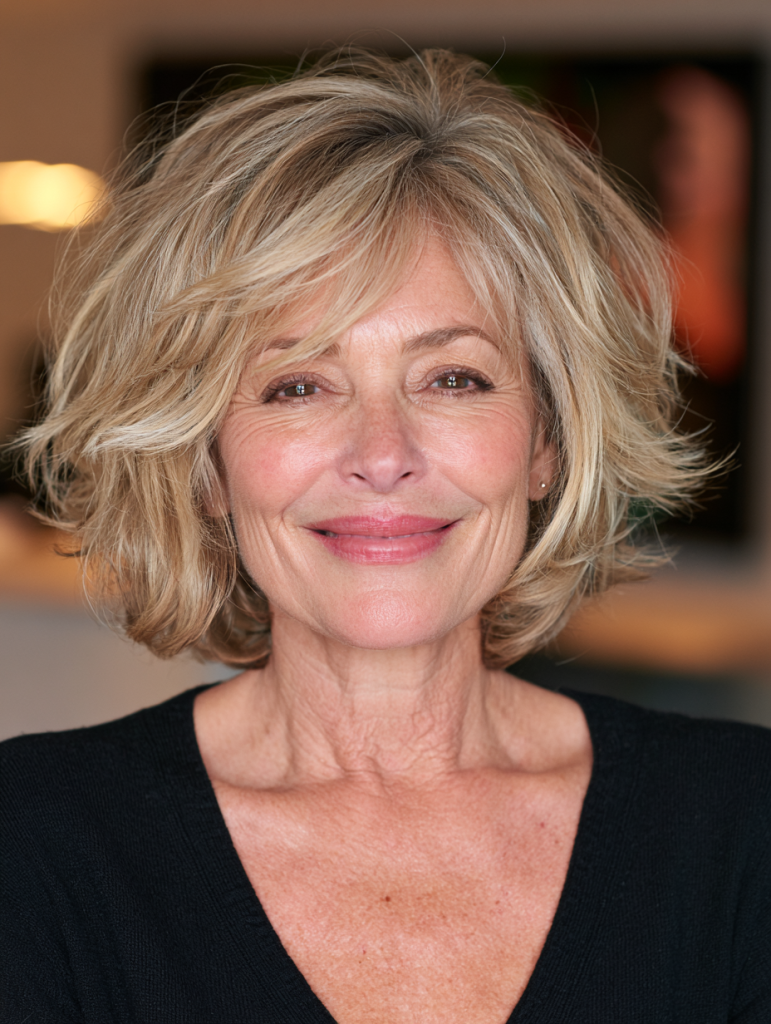
Apply volumizing mousse primarily around the roots and blow-dry the crown upward with a small round brush. Keep the lower sections smoother and avoid excessive texturizing. Flexible finishing spray can maintain the gentle elevation, producing a balanced bob with visible volume without sacrificing fullness through the ends.
Side-Parted Pixie Bob
A side-parted pixie bob combines compact length with asymmetrical movement, shifting additional fullness toward one side of the crown. Slightly longer front pieces provide softness while shorter back sections keep thin hair from becoming weighed down.
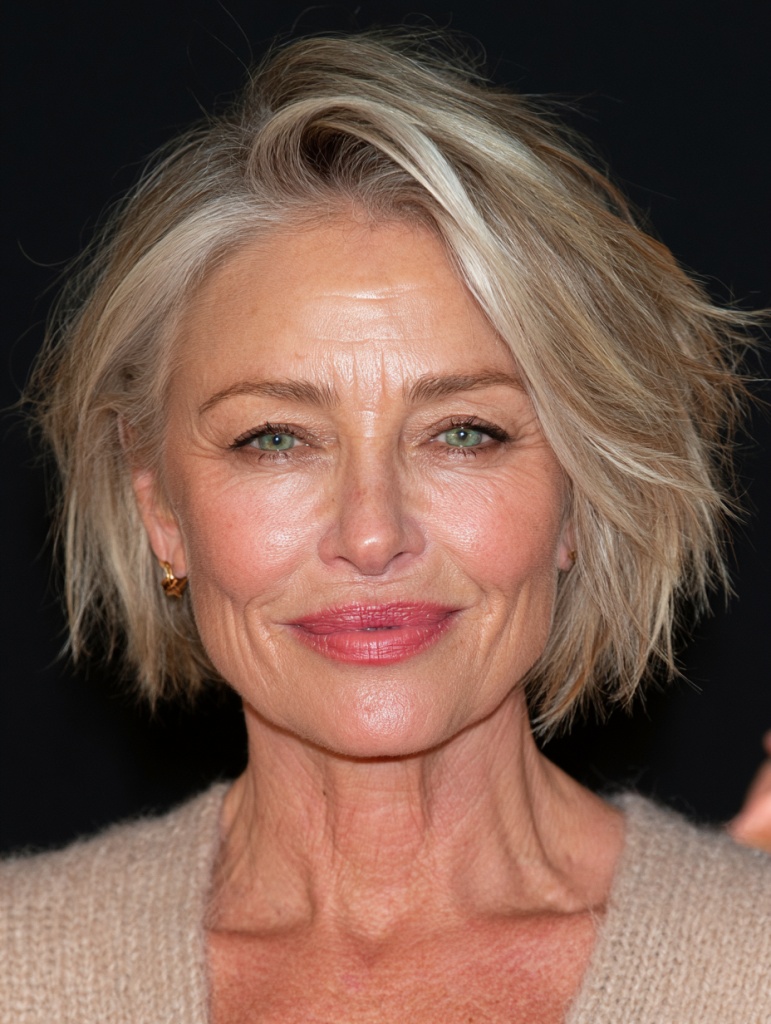
Create the part while damp and blow-dry the heavier section upward before directing it sideways. Keep the opposite side smoother or tuck it behind the ear. A small amount of texture spray can support the upper movement, giving the hybrid haircut a fuller, naturally polished appearance.
Soft Shaggy Bob
A soft shaggy bob introduces relaxed texture through restrained layering rather than heavily thinning the entire haircut. Shorter crown pieces create movement, while a stronger lower perimeter prevents thin hair from appearing excessively sparse or disconnected.
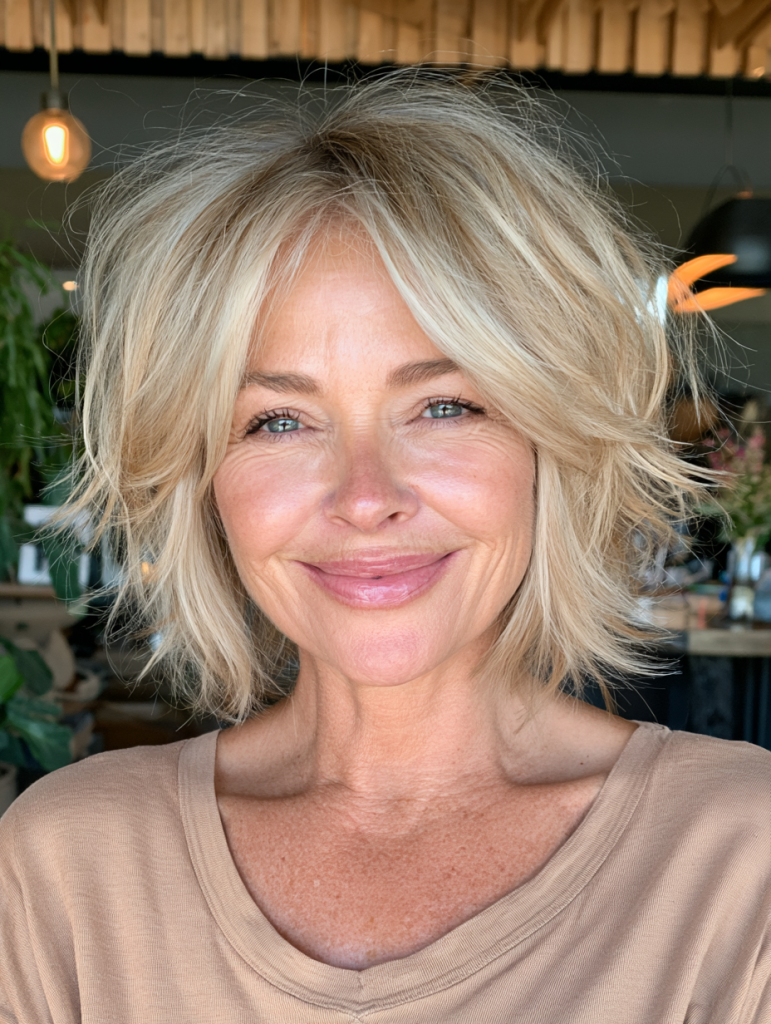
Apply lightweight mousse at the roots and encourage natural movement while blow-drying with your fingers. Add a few loose bends through the mid-lengths if needed. Avoid aggressively separating the ends. Keeping the shag texture subtle creates an easygoing hairstyle with volume, personality, and enough density to remain flattering.
A Volume-Friendly Styling Routine for Thin Hair
Thin hair usually responds best to lightweight products that create support without leaving residue. Volumizing mousse, root spray, and dry texture products can provide lift, while heavy oils and thick creams may cause strands to collapse. Concentrate product around the roots rather than saturating the entire length.
Blow-dry with gentle elevation and avoid excessive teasing, particularly when strands are delicate. Changing the part occasionally can also encourage temporary root lift. Most importantly, preserve density through regular trims and restrained layering. The goal is controlled fullness rather than forcing thin hair into an unnaturally large silhouette.
Final Thoughts
Hairstyles for thin hair over 50 can create noticeable fullness through thoughtful shape rather than excessive styling. Blunt bobs preserve density, pixies remove weight, and softly graduated cuts encourage crown lift. Strategic bangs, waves, and side parts can further enhance dimension without sacrificing valuable thickness.
The best haircut should make thin hair easier to manage while keeping the ends healthy and substantial. Avoiding excessive layering is often just as important as creating volume. Would you choose a strong blunt bob, a softly feathered pixie, or a shoulder-length lob with a fuller perimeter?
