
Haircuts that make thin hair look thicker rely on smart weight distribution rather than simply adding more layers. Strong perimeters, compact lengths, subtle graduation, and carefully positioned crown movement can make strands appear denser while preserving valuable fullness. Blunt bobs, bixies, pixies, lobs, and softly stacked cuts are especially useful because their shapes can create visible body without demanding excessive daily styling.
It is also important to distinguish thin hair from fine hair. Thin hair describes lower overall density, while fine hair refers to individual strand diameter. Your ideal haircut should consider both factors alongside texture, growth patterns, and preferred maintenance. These 18 haircuts offer practical ways to create a fuller-looking silhouette while keeping the hair stylish and manageable.
The Secret Is Keeping Fullness in the Right Places
Removing too much hair can work against the goal of creating density. Heavy razoring, aggressive thinning, or numerous short layers may weaken the perimeter, particularly when overall hair density is already limited. A stronger baseline can make the ends appear noticeably more substantial.
Strategic layering still has value when used selectively. Gentle crown graduation can provide lift, while subtle face-framing pieces create movement without sacrificing significant density. The strongest haircut usually combines preserved weight with carefully controlled volume.
Blunt Chin-Length Bob
A blunt chin-length bob concentrates available density into one strong perimeter, helping the ends appear thicker and more substantial. The shorter length also reduces downward weight, allowing the roots to maintain greater natural lift than they often achieve with longer hair.

Apply lightweight volumizing mousse around the roots and blow-dry with gentle elevation. Keep the ends relatively straight or introduce only a subtle bend. Avoid heavily separating the perimeter with wax or oils. A clean baseline provides most of the thickening effect, so regular trims help preserve its strength.
One-Length French Bob
A one-length French bob keeps layering minimal, allowing thin strands to gather into a compact, substantial silhouette. The shorter perimeter can create the impression of greater density, while optional fringe adds another visible area of fullness around the forehead.

Blow-dry with lightweight mousse and maintain gentle root movement rather than flattening the hair completely. Keep the ends strong and avoid excessive texturizing. If adding bangs, preserve enough density so they do not appear overly wispy. A slightly undone finish can create movement without weakening the haircut’s compact shape.
Soft Stacked Bob
A softly stacked bob introduces controlled graduation through the back, creating natural elevation around the crown while preserving longer, fuller-looking sections toward the sides. Keeping the stacking subtle prevents thin hair from losing too much valuable density.

Apply root-lifting mousse around the crown and blow-dry the back sections against their natural direction. Once dry, settle them gently into place. Keep the side perimeter substantial and avoid aggressive thinning. Flexible hairspray can support the lifted profile while maintaining enough movement for a natural finish.
Blunt Jaw-Length Bob
A jaw-length bob creates a compact horizontal baseline that visually strengthens thin ends. Limiting layers allows the available hair to remain concentrated along the perimeter, making this cut particularly effective for straight or softly wavy strands with lower density.

Apply volumizing foam at the roots and establish your preferred part before blow-drying. Create gentle side volume rather than excessive crown height. Keep the ends smooth and substantial. A slightly off-center part can provide additional root lift while preserving the clean, density-enhancing outline.
Textured Pixie With Full Crown
A textured pixie removes the weight of longer lengths while preserving sufficient density through the crown. Strategic upper layers can create lift and dimension, while compact sides make the fuller top appear more substantial by contrast.

Apply lightweight root mousse and finger-dry the crown upward in several directions. Once completely dry, define only selected pieces with minimal matte paste. Avoid separating every strand because broader sections maintain the appearance of density. Keep heavy styling products away from fine or delicate roots.
Bixie With Side-Swept Fringe
A bixie combines the shorter proportions of a pixie with fuller bob-inspired sections around the crown, sides, and fringe. The additional front length can create visible movement while a compact neckline keeps the overall haircut lightweight.

Apply volumizing foam to damp hair and blow-dry the crown with gentle root elevation. Sweep the fringe diagonally and keep the sides relatively substantial. Once dry, define several pieces with flexible cream. Avoid excessive layering around the perimeter, where preserved density contributes strongly to the fuller-looking effect.
Blunt Collarbone Cut
A blunt collarbone cut provides enough length for versatility while maintaining a strong baseline that makes thin ends appear more substantial. Keeping internal layering minimal helps preserve density through the lower sections, creating a polished medium-length silhouette.

Apply lightweight mousse around the roots and blow-dry with moderate elevation. Add broad bends through selected sections when additional movement is desired, but avoid curling every piece tightly. Keep the lower perimeter visually strong. Regular trims prevent fragile ends from weakening the thickening effect.
Rounded Bob With Side Part
A rounded bob creates gentle fullness around the sides, while a side part naturally shifts more hair toward one area and generates additional root lift. The curved silhouette can make thin hair appear softer and more dimensional without requiring aggressive layering.

Apply root-lifting product and establish the part before drying. Use a medium round brush to create restrained curvature through the sides. Avoid excessive teasing because it can separate delicate strands and reveal more scalp. Finish lightly with flexible spray to preserve the rounded shape.
Short Graduated Bob
A graduated bob uses progressively shorter sections through the back to establish a naturally lifted profile. When the graduation remains controlled, the haircut can create crown volume without removing excessive density from the sides or lower perimeter.

Apply volumizing mousse and blow-dry the crown upward with a small round brush. Keep the side sections smoother and fuller. Once cool, loosen the roots gently with your fingers. Avoid extreme stacking, which may leave thin hair looking sparse through the lower back when too much weight is removed.
Angled Bob With Strong Ends
An angled bob keeps the back slightly shorter while gradually extending toward the front. This directional perimeter provides visual interest without relying on numerous layers, allowing thin hair to maintain a stronger, denser-looking outline.

Apply lightweight mousse and blow-dry with moderate root elevation. Keep the longer front sections smooth so the angle remains clearly visible. Create a subtle bend through the ends if desired. Avoid heavy internal thinning, since the substantial perimeter is responsible for much of the haircut’s fuller appearance.
Pixie Bob With Crown Volume
A pixie bob keeps the neckline compact while preserving longer sections around the crown and sides. Gentle elevation through the top creates dimension, while the additional perimeter length provides more softness and visual density than a very short pixie.

Apply root-lifting foam and blow-dry the crown against its natural growth direction. Once dry, settle the upper sections into place and keep the sides softly shaped. Use minimal styling cream through selected ends. Lightweight products are important because excessive coating can quickly collapse delicate strands.
Lob With Minimal Layers
A lob with minimal layering preserves a substantial lower perimeter while offering enough length for ponytails, waves, and other styling options. Restrained internal shaping prevents the haircut from becoming excessively heavy without sacrificing the density needed for fuller-looking ends.

Apply volumizing mousse at the roots and blow-dry with gentle elevation. Add broad waves through selected lengths for additional dimension. Keep the perimeter relatively blunt and avoid heavily feathering the ends. The combination of subtle movement and strong weight lines creates a naturally thicker-looking finish.
Short Crop With Side Bangs
A short crop reduces the weight that can pull thin hair flat while preserving longer sections through the crown and fringe. Side bangs create directional movement and can provide additional coverage around the forehead without requiring a particularly dense fringe.

Apply lightweight mousse and finger-dry the crown with moderate lift. Direct the bangs toward one side and leave them softly grouped. Once dry, define only a few upper pieces with matte paste. Avoid applying heavy product around the fringe, where separated strands can appear noticeably thinner.
Soft Inverted Bob
A soft inverted bob creates gradual elevation from a shorter back toward longer front sections. The lifted profile can make the crown appear fuller, while maintaining substantial sides prevents the overall haircut from looking excessively layered or sparse.

Apply root-lifting product around the back and blow-dry with controlled elevation. Keep the front pieces smoother and slightly curved. Once cool, loosen the crown gently with your fingertips. Ask for restrained graduation rather than dramatic stacking when preserving density is the primary goal.
Full Pixie With Long Side Bangs
A fuller pixie preserves extra length through the crown and front while keeping the neckline and sides manageable. Long side bangs create a substantial sweep across the forehead, giving thin hair more visible movement and helping the overall style appear denser.
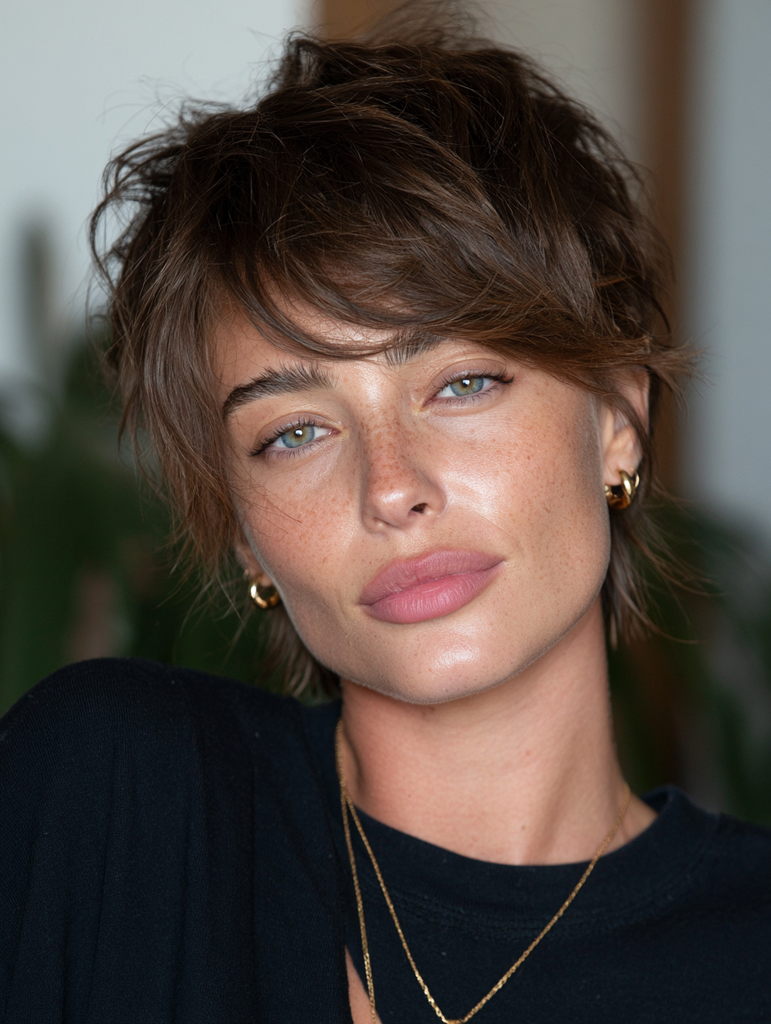
Apply lightweight volumizing mousse and blow-dry the crown with gentle elevation. Direct the fringe diagonally using your fingers or a small round brush. Keep the sections broad rather than separating every strand. Flexible hairspray can provide support without making the hairstyle stiff or overly piecey.
Shoulder-Length Cut With Subtle Layers
A shoulder-length haircut can maintain a thick-looking perimeter when the layers remain long and strategically placed. Subtle shaping around the front introduces movement without removing significant density from the sides and back, making this option suitable when preserving length matters.

Apply lightweight root spray and blow-dry with moderate elevation. Direct the facial pieces slightly away from the face while leaving the lower lengths comparatively full. Avoid excessive thinning through the ends. A strong baseline helps the haircut retain a substantial appearance even between styling sessions.
Short Bob With Full Bangs
A short bob paired with full bangs creates visible density in two areas: across the lower perimeter and through the forehead. Keeping both sections substantial can make thin hair appear more abundant while providing a polished, structured silhouette.
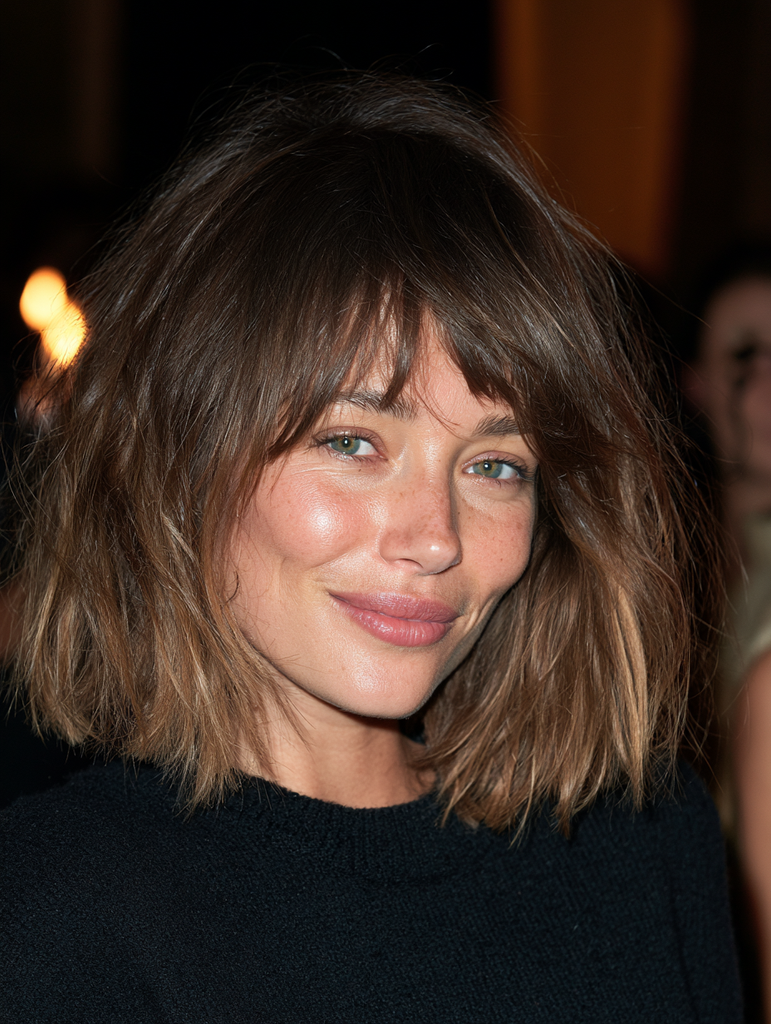
Blow-dry the fringe forward with gentle tension and maintain slight root elevation through the bob. Avoid heavily texturizing either the bangs or perimeter. A lightweight mousse can create additional body without separating the strands. Keep finishing products minimal so the clean, fuller-looking lines remain clearly visible.
Long One-Length Cut With Face Framing
Long hair can appear thicker when the lower perimeter remains strong and layering is kept deliberately minimal. A few longer face-framing pieces provide movement around the front without removing substantial density from the main lengths.
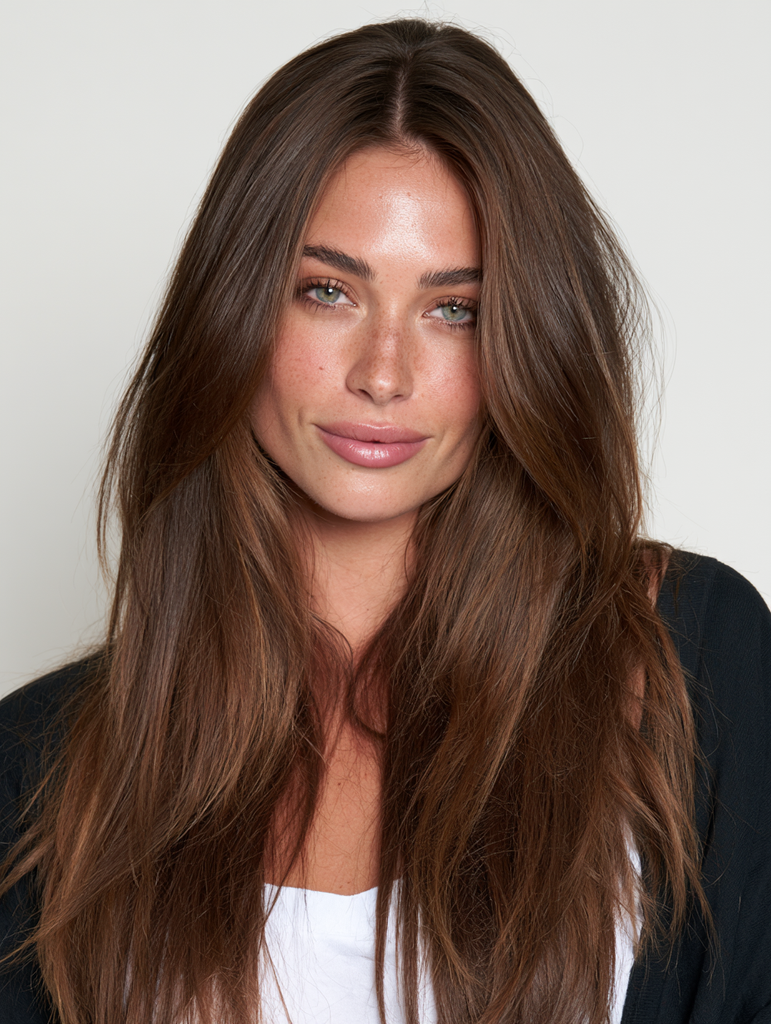
Apply lightweight root-lifting product and blow-dry the upper sections with gentle elevation. Direct the facial pieces away from the face and keep the remaining lengths smooth or softly waved. Regular trims are especially important because thin, weathered ends can quickly weaken the appearance of an otherwise substantial perimeter.
Why These Haircuts Create the Illusion of Greater Density
The strongest thickening effect usually comes from preserving visible weight. Blunt baselines make individual strands gather together, while shorter lengths can reduce the downward pull that leaves roots flat. Subtle graduation can provide additional crown lift when it is carefully controlled.
Avoid assuming that thin hair always needs extensive layering. Too many short pieces can reduce density through the perimeter and make the scalp more noticeable. Your stylist should consider strand diameter, overall density, natural texture, growth direction, and areas where thinning is most noticeable before choosing the final shape.
How to Style Thin Hair So It Appears Fuller
Use lightweight volumizing products primarily around the roots. Blow-drying against the natural growth direction can temporarily increase elevation, while switching the part occasionally can prevent the roots from settling completely flat. Broad bends and soft waves can also create dimension through medium or longer hair.
Avoid heavy oils, thick waxes, and excessive amounts of product. Thin hair can become weighed down quickly, reducing the movement that helps create visual fullness. Dry texture spray can provide grip, while flexible hairspray supports lift. When using hot tools, apply heat protection and avoid repeatedly passing over fragile sections.
Final Thoughts
Haircuts that make thin hair look thicker range from blunt bobs and compact pixies to bixies, collarbone cuts, lobs, and carefully layered longer styles. What matters most is preserving density strategically rather than removing unnecessary weight throughout the haircut.
Choose a length and silhouette that complement your natural texture and daily styling routine. Strong ends can make the perimeter appear fuller, while controlled crown shaping creates useful lift. With thoughtful cutting and lightweight styling, thin hair can look more substantial, dimensional, healthy, and beautifully polished.
