
Volumizing haircuts for thin hair rely on strategic shape, strong perimeters, and carefully controlled layering to create the appearance of greater density. Rather than removing too much weight, the most effective cuts preserve fullness where it matters while adding movement around the crown or face. Blunt bobs, stacked shapes, textured pixies, collarbone cuts, and restrained layers can all help thin hair appear more substantial.
The right haircut depends on whether your hair is fine, sparse, straight, wavy, or naturally textured. Fine strands often respond well to clean baselines, while subtle graduation can create additional lift without sacrificing density. These 17 volumizing haircuts for thin hair offer short, medium, and longer options designed to maximize movement and visual fullness.
Strategic Shape Makes Thin Hair Look More Substantial
Thin hair generally benefits from intentional weight placement. Excessive thinning, numerous short layers, or heavily razored ends can sometimes expose more scalp and make the perimeter appear weaker. Stronger baselines and restrained layering usually create a more substantial silhouette.
Volume also depends on styling habits. Lightweight root products, directional blow-drying, and changing the part can enhance a well-designed haircut considerably. The goal is to establish fullness through the cut first, then use styling products to support rather than manufacture the entire shape.
Blunt Chin-Length Bob
A blunt chin-length bob creates a strong horizontal baseline that makes the ends appear denser and more substantial. Keeping layering minimal preserves valuable weight, while the shorter length prevents fine strands from being pulled flat by unnecessary heaviness.

Apply lightweight volumizing mousse around the roots and blow-dry with gentle elevation. Create a subtle bend through the ends rather than aggressively curling them inward. Avoid heavy oils and waxes that can collapse fine strands. A side or slightly off-center part can provide additional root movement without changing the haircut.
Stacked Bob With Crown Volume
A softly stacked bob uses gradual graduation through the back to create natural elevation while maintaining longer sections around the front. Controlled stacking can make the crown appear fuller without excessively thinning the perimeter, which is particularly important for delicate hair.

Apply root-lifting mousse around the crown and blow-dry the back sections against their natural direction. Once dry, settle them gently into shape. Keep the front relatively substantial and avoid excessive texturizing. Flexible hairspray can support the lifted profile while preserving natural movement and softness.
Textured Pixie With Long Crown
A textured pixie keeps the sides compact while preserving additional length through the crown. The contrast allows upper strands to create visible lift and movement, making thin hair appear more dimensional without requiring significant overall density.

Apply volumizing foam to damp roots and finger-dry the crown upward in several directions. Once completely dry, define only selected pieces with lightweight matte paste. Avoid separating every strand, since broader sections maintain the appearance of fullness. Keep styling products minimal to prevent delicate hair from becoming weighed down.
Blunt Collarbone Cut
A collarbone cut offers more length than a bob while preserving a substantial perimeter that can make thin hair appear fuller. Minimal layering keeps density concentrated toward the ends, creating a clean silhouette that works particularly well for straight or softly wavy textures.

Apply lightweight mousse through the roots and blow-dry with moderate elevation. Add broad bends through selected sections if additional movement is desired. Avoid heavily feathering the ends. Keeping the lower perimeter strong provides the visual weight that makes this medium-length haircut especially effective for thinner hair.
Graduated Short Bob
A graduated bob builds gentle elevation through the back while maintaining enough length through the sides to create a substantial outline. The controlled progression of lengths can add shape and volume without relying on excessive layering throughout the entire haircut.

Blow-dry the back sections with a small round brush, lifting gently at the roots. Keep the sides comparatively smooth and full. Once cool, arrange the crown with your fingers and apply flexible finishing spray. Avoid aggressive thinning around the perimeter, where density contributes most strongly to a fuller-looking result.
Bixie With Side-Swept Bangs
A bixie combines the compact structure of a pixie with slightly longer bob-inspired sections around the sides and fringe. Side-swept bangs create additional movement across the front, while shorter crown layers can provide controlled lift without sacrificing too much density.

Apply lightweight volumizing foam and blow-dry the crown against its natural direction. Sweep the fringe sideways with gentle elevation. Once dry, define only several pieces with flexible cream. Keeping the sides relatively substantial prevents the haircut from appearing overly sparse or heavily layered.
One-Length Jaw Bob
A one-length jaw bob minimizes layering so the available density remains concentrated along a clean lower edge. The compact length also reduces the weight pulling strands downward, allowing the roots to maintain more natural elevation throughout the day.

Apply root spray or lightweight mousse before blow-drying. Shift the part slightly while drying to encourage lift, then return it to the preferred position. Keep the ends smooth but not excessively flat. Lightweight dry texture spray can provide additional grip without making fine strands feel coated.
Soft Layered Lob
A softly layered lob introduces restrained movement while preserving a strong overall perimeter. The key is keeping the layers long enough that they do not remove substantial density, allowing thin hair to maintain fullness while gaining shape around the face.

Apply volumizing mousse around the roots and use a large round brush to create broad movement. Concentrate on lifting the upper sections rather than curling every end. Once cool, loosen the hair gently with your fingers. A few face-framing pieces can add dimension without weakening the lower silhouette.
Rounded Bob With Side Part
A rounded bob creates gentle side fullness while a shifted part naturally gives one side additional root elevation. Keeping the perimeter substantial allows the curved silhouette to appear fuller, making this style particularly useful for straight or slightly wavy thin hair.

Apply lightweight root-lifting product and establish the side part before drying. Use a medium round brush to create restrained curvature through the sides. Avoid excessive teasing, which can separate fine strands and expose more scalp. Finish with flexible spray to maintain the rounded volume without stiffness.
French Bob With Full Fringe
A French bob combines a compact perimeter with fuller fringe, creating density around both the jaw and forehead. The shorter length helps prevent fine strands from becoming weighed down, while restrained layering maintains a strong and substantial silhouette.

Blow-dry the fringe forward with minimal tension and create gentle root elevation through the remaining hair. Keep the ends relatively blunt rather than heavily textured. Lightweight mousse can support the shape, while a small amount of dry texture spray adds movement without sacrificing the fuller appearance.
Layered Pixie Bob
A pixie bob uses shorter back sections and slightly longer crown and side pieces to create a naturally lifted profile. Strategic layering can provide dimension while preserving enough weight through the front and perimeter to prevent thin hair from looking sparse.

Apply volumizing foam to damp hair and blow-dry the crown upward and slightly forward. Keep the side pieces smooth and substantial. Once dry, use minimal styling cream to define selected sections. Avoid coating the entire haircut, since lightweight movement usually creates the strongest impression of density.
Angled Bob for Thin Hair
An angled bob keeps the back slightly shorter while gradually extending toward the front. The directional perimeter creates visible shape without requiring numerous layers, allowing thin hair to retain density while appearing more structured and dimensional.

Apply lightweight mousse and blow-dry the roots with gentle elevation. Keep the front sections smooth so the angled line remains noticeable. A slight bend through the ends can provide additional body. Avoid aggressive internal thinning, which may weaken the substantial outline that gives this haircut its fuller appearance.
Short Shag With Controlled Layers
A short shag can work for thin hair when the layering remains restrained and sufficient density is preserved through the perimeter. Carefully positioned crown pieces create lift and movement without producing the excessively wispy finish associated with heavily texturized shags.

Apply lightweight texture foam and finger-dry the crown upward in several directions. Keep the lower sections relatively grouped rather than separating every end. Once dry, define selected pieces with minimal styling cream. Controlled irregularity creates volume while maintaining the visual density thin hair needs.
Shoulder-Length Cut With Face-Framing Layers
A shoulder-length haircut preserves enough weight to create a substantial baseline while subtle facial layers introduce movement around the front. Limiting shorter pieces prevents valuable density from being removed throughout the sides and back.

Apply volumizing mousse at the roots and blow-dry with gentle elevation. Direct the face-framing sections away from the cheeks using a round brush. Keep the lower lengths comparatively smooth and full. Lightweight finishing spray can maintain movement while allowing the strong perimeter to remain the hairstyle’s visual foundation.
Soft Inverted Bob
A soft inverted bob creates gentle graduation from a shorter back toward longer front sections. The raised back can establish natural crown volume, while the longer sides maintain enough weight to keep the haircut looking substantial rather than overly layered.

Apply root-lifting mousse and blow-dry the back sections with controlled elevation. Keep the front pieces smoother and slightly curved. Once cool, loosen the crown gently with your fingertips. Avoid extreme stacking or excessive thinning, which can reduce density when the hair is already naturally thin.
Short Crop With Wispy Side Fringe
A short crop reduces the weight that can pull thin strands flat while preserving slightly longer pieces through the crown and fringe. A soft side fringe introduces movement around the forehead without requiring a dense amount of hair.

Apply lightweight volumizing foam and finger-dry the crown upward. Sweep the fringe sideways with minimal tension and keep it flexible. Once dry, define only several upper pieces with matte paste. Avoid heavy products around the fringe because delicate strands can quickly become separated and appear thinner.
Long Hair With Minimal Face-Framing Layers
Long hair can still look full when layering is kept minimal and the lower perimeter remains strong. Subtle face-framing pieces introduce movement around the front without removing significant density from the lengths, making this approach useful when preserving length is important.
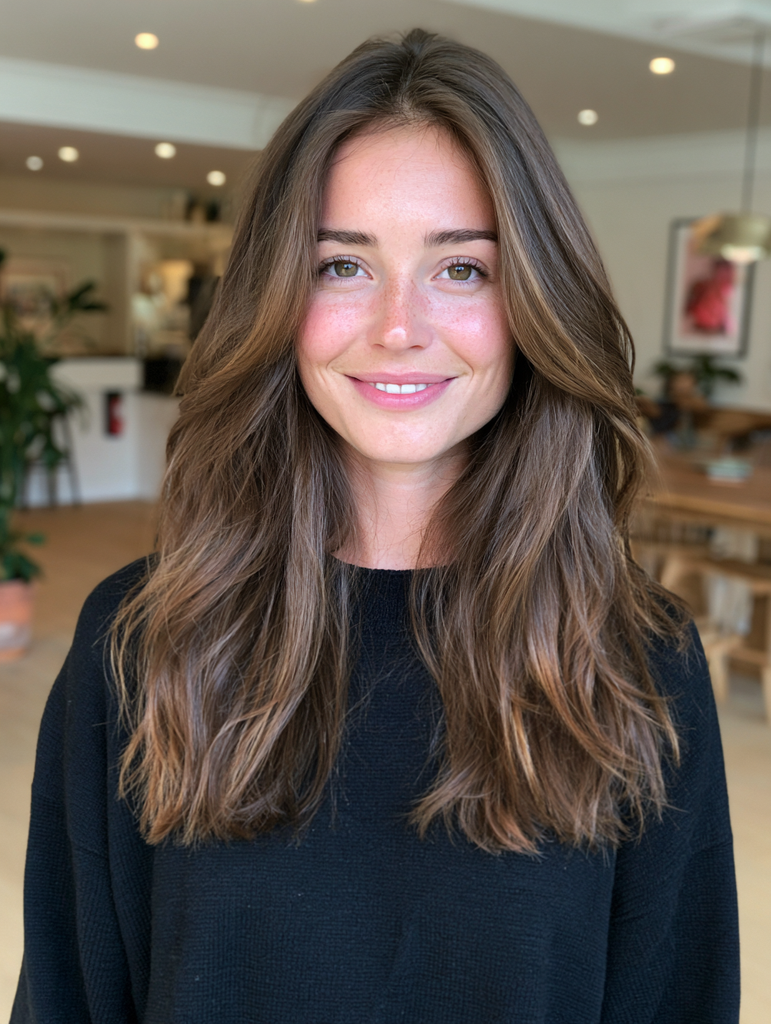
Apply root-lifting product sparingly and blow-dry the upper sections with gentle elevation. Direct the facial layers away from the face while keeping the remaining lengths relatively smooth. Regular trims help maintain a substantial baseline. Avoid excessive thinning through the ends, where fullness is most visually important.
Why These Cuts Create a Fuller-Looking Effect
Volumizing haircuts for thin hair work primarily by controlling where density remains. Strong perimeters make the ends look more substantial, while carefully positioned crown layers can create elevation without sacrificing too much hair. Shorter lengths may also reduce the weight that causes delicate strands to lie flat.
The ideal strategy depends on both strand thickness and overall density. Fine hair describes the diameter of individual strands, while thin hair refers to how much hair is present. Someone can have fine strands but high density, so the best layering approach should always be personalized rather than determined by one label.
How to Style Thin Hair for More Volume
Apply lightweight volumizing products primarily around the roots rather than coating the entire length. Blow-drying against the natural growth direction can create temporary elevation, while changing the part occasionally may prevent the roots from settling completely flat.
Avoid relying on heavy oils, thick waxes, or excessive finishing products. Fine and thin hair can become overloaded quickly, which reduces movement and makes sections separate. Dry texture spray can provide grip, while flexible hairspray supports volume without creating stiffness. Heat protection remains important whenever hot tools are used.
Final Thoughts
Volumizing haircuts for thin hair include much more than aggressively layered styles. Blunt bobs, soft stacks, pixies, bixies, collarbone cuts, angled bobs, and restrained long layers can all create fuller-looking silhouettes by preserving density strategically.
Choose your haircut according to natural texture, strand thickness, overall density, and preferred length. The strongest result usually comes from maintaining substantial ends while creating lift only where it adds useful dimension. With thoughtful shaping and lightweight styling, thin hair can appear fuller, more dynamic, polished, and beautifully balanced.
